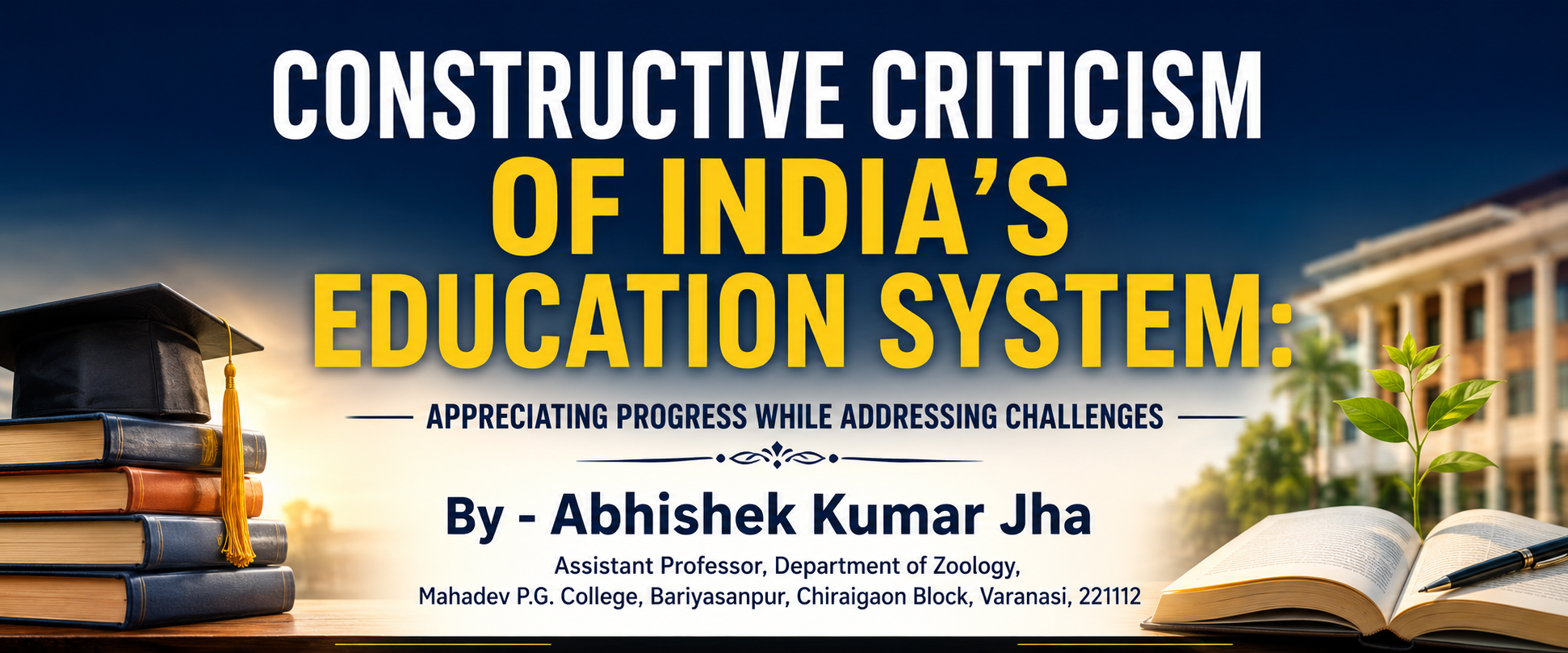

भारत की शिक्षा व्यवस्था की रचनात्मक आलोचना: प्रगति की सराहना के साथ चुनौतियों का समाधान -
मैं भाजपा सरकार की व्यापक सोच और विकास दृष्टि का समर्थन करता हूँ, किंतु मेरा मानना है कि वास्तविक समर्थन का अर्थ केवल प्रशंसा करना नहीं, बल्कि ईमानदार प्रतिक्रिया देना भी है। एक सशक्त राष्ट्र की नींव उसकी मजबूत संस्थाओं पर टिकी होती है और शिक्षा उनमें सबसे महत्वपूर्ण है। भारत ने शिक्षा की पहुँच बढ़ाने, डिजिटल शिक्षा को प्रोत्साहित करने, राष्ट्रीय शिक्षा नीति (NEP) 2020 लागू करने तथा बहुविषयक शिक्षा को बढ़ावा देने जैसे क्षेत्रों में उल्लेखनीय प्रगति की है। ये सुधार शिक्षा व्यवस्था के आधुनिकीकरण की सकारात्मक मंशा को दर्शाते हैं।
फिर भी, कुछ गंभीर समस्याएँ आज भी भारतीय शिक्षा व्यवस्था की विश्वसनीयता और प्रभावशीलता को कमजोर कर रही हैं।
प्रमुख चिंताएँ -
1. परीक्षा घोटाले एवं भर्ती प्रक्रियाओं में अनियमितताएँ
एसएससी परीक्षाओं, भर्ती प्रक्रियाओं में देरी, प्रश्नपत्र लीक तथा अनियमितताओं से जुड़े लगातार विवादों ने विद्यार्थियों का विश्वास गंभीर रूप से प्रभावित किया है। लाखों युवा वर्षों तक कठिन परिश्रम करके इन परीक्षाओं की तैयारी करते हैं और किसी भी प्रकार की अनियमितता उनके करियर तथा मानसिक स्वास्थ्य पर प्रतिकूल प्रभाव डालती है।
2. नीट एवं अन्य प्रतियोगी परीक्षाओं में प्रश्नपत्र लीक
नीट प्रश्नपत्र लीक प्रकरण ने परीक्षा सुरक्षा व्यवस्था की कमजोरियों को उजागर किया। प्रतियोगी परीक्षाओं का उद्देश्य योग्यता, परिश्रम और ईमानदारी को पुरस्कृत करना होना चाहिए। परीक्षा की निष्पक्षता में किसी भी प्रकार का समझौता प्रतिभाशाली विद्यार्थियों को हतोत्साहित करता है और जनविश्वास को कमजोर करता है।
3. सीबीएसई एवं अन्य बोर्डों की मूल्यांकन संबंधी समस्याएँ
अनेक विद्यार्थियों और शिक्षकों ने उत्तर पुस्तिकाओं के डिजिटल मूल्यांकन, मॉडरेशन प्रक्रिया तथा पारदर्शिता से जुड़ी विसंगतियों पर चिंता व्यक्त की है। मूल्यांकन प्रणाली निष्पक्ष, पूर्वानुमेय और गुणवत्ता नियंत्रण के अधीन होनी चाहिए।
4. राष्ट्रीय शिक्षा नीति 2020 के क्रियान्वयन में कमियाँ
राष्ट्रीय शिक्षा नीति की परिकल्पना सराहनीय है, किंतु इसका क्रियान्वयन अभी भी असमान और अधूरा है। अनेक विद्यालयों और महाविद्यालयों में प्रशिक्षित शिक्षकों, पर्याप्त आधारभूत संरचना, प्रयोगशालाओं, डिजिटल संसाधनों तथा वित्तीय सहायता का अभाव है, जिससे नीति के उद्देश्यों को प्रभावी रूप से लागू करने में कठिनाई आती है।
5. परीक्षाओं पर अत्यधिक निर्भरता
शिक्षा व्यवस्था आज भी रचनात्मकता, विश्लेषणात्मक चिंतन, संचार कौशल और व्यावहारिक ज्ञान की अपेक्षा अंकों तथा रटने की प्रवृत्ति को अधिक महत्व देती है। परिणामस्वरूप विद्यार्थी विषय को समझने के बजाय केवल परीक्षा उत्तीर्ण करने के लिए अध्ययन करते हैं।
6. कौशल अंतराल एवं रोजगार संकट
बड़ी संख्या में स्नातक विद्यार्थी उद्योगों की आवश्यकताओं के अनुरूप कौशल विकसित नहीं कर पाते। शैक्षणिक पाठ्यक्रम और वास्तविक रोजगार बाजार के बीच समन्वय की कमी के कारण उच्च शैक्षणिक योग्यता होने के बावजूद बेरोजगारी की समस्या बनी रहती है।
7. शिक्षक प्रशिक्षण एवं जवाबदेही
शिक्षक शिक्षा व्यवस्था की रीढ़ हैं, फिर भी अनेक संस्थानों में उनके सतत व्यावसायिक विकास के लिए पर्याप्त कार्यक्रम उपलब्ध नहीं हैं। गुणवत्तापूर्ण शिक्षा तभी संभव है जब शिक्षक प्रशिक्षण और सहयोग तंत्र में पर्याप्त निवेश किया जाए।
समाधान -
1. राष्ट्रीय स्वतंत्र परीक्षा प्राधिकरण की स्थापना
एक तकनीकी रूप से उन्नत एवं स्वायत्त संस्था का गठन किया जाए, जो प्रमुख परीक्षाओं और भर्ती प्रक्रियाओं का संचालन करे। इसमें एन्क्रिप्टेड डिजिटल प्रश्नपत्र प्रेषण, बायोमेट्रिक सत्यापन, कृत्रिम बुद्धिमत्ता (AI) आधारित निगरानी तथा कठोर जवाबदेही व्यवस्था लागू की जाए।
2. परीक्षा धोखाधड़ी के मामलों के लिए त्वरित न्यायिक व्यवस्था
परीक्षा संबंधी अपराधों के निपटारे हेतु विशेष न्यायालय स्थापित किए जाएँ। प्रश्नपत्र लीक, संगठित नकल तथा भर्ती घोटालों के दोषियों को त्वरित एवं कठोर दंड दिया जाए।
3. पारदर्शी डिजिटल मूल्यांकन प्रणाली
परिणाम घोषित होने के बाद विद्यार्थियों को उनकी स्कैन की गई उत्तर पुस्तिकाएँ उपलब्ध कराई जाएँ। साथ ही AI आधारित मॉडरेशन और यादृच्छिक पुनर्मूल्यांकन प्रणाली लागू की जाए ताकि निष्पक्षता और पारदर्शिता सुनिश्चित हो सके।
4. शिक्षक विकास पर विशेष ध्यान
वार्षिक शिक्षक प्रशिक्षण, आधुनिक शिक्षण पद्धतियों पर कार्यशालाएँ, डिजिटल साक्षरता कार्यक्रम तथा प्रदर्शन आधारित प्रोत्साहन को शिक्षा व्यवस्था का नियमित हिस्सा बनाया जाए।
5. व्यावहारिक एवं शोध आधारित शिक्षा को बढ़ावा
विद्यालयों और महाविद्यालयों में रटने की प्रवृत्ति के स्थान पर परियोजनाओं, इंटर्नशिप, प्रयोगशाला कार्य, क्षेत्रीय अध्ययन तथा समस्या समाधान आधारित शिक्षण को प्राथमिकता दी जाए।
6. उद्योग एवं शिक्षण संस्थानों के बीच समन्वय
विश्वविद्यालयों को उद्योगों के साथ नियमित सहयोग स्थापित करना चाहिए ताकि पाठ्यक्रम समय-समय पर अद्यतन किए जा सकें, विद्यार्थियों को इंटर्नशिप मिल सके और वे रोजगारोन्मुख कौशल विकसित कर सकें।
7. भर्ती प्रक्रियाओं में सुधार
सभी भर्ती एजेंसियों को स्पष्ट एवं पारदर्शी समय-सारिणी जारी करनी चाहिए, निर्धारित समय पर परीक्षाएँ आयोजित करनी चाहिए तथा रिक्त पदों को अनावश्यक विलंब के बिना भरना चाहिए।
8. शिक्षा में अधिक निवेश
भारत को शिक्षा पर सार्वजनिक व्यय को धीरे-धीरे अंतरराष्ट्रीय मानकों के अनुरूप बढ़ाना चाहिए। बेहतर आधारभूत संरचना, प्रयोगशालाएँ, पुस्तकालय और डिजिटल संसाधन दीर्घकालिक सुधार के लिए आवश्यक हैं।
9. जवाबदेही आधारित मूल्यांकन प्रणाली
शैक्षणिक संस्थानों, परीक्षा निकायों तथा नियामक संस्थाओं का नियमित रूप से उनके प्रदर्शन, पारदर्शिता और परिणामों के आधार पर मूल्यांकन एवं ऑडिट किया जाना चाहिए।
10. राजनीतिक विमर्श से ऊपर सीखने के परिणामों को प्राथमिकता
शिक्षा सुधारों का केंद्र वैज्ञानिक दृष्टिकोण, आलोचनात्मक चिंतन, नवाचार, नैतिकता और राष्ट्रीय विकास होना चाहिए। शिक्षा का मुख्य उद्देश्य विद्यार्थियों का बौद्धिक विकास होना चाहिए।
निष्कर्ष -
किसी सरकार का समर्थन करने का अर्थ उसकी कमियों पर मौन रहना नहीं है। रचनात्मक आलोचना लोकतंत्र को मजबूत बनाती है और सरकारों को बेहतर कार्य करने के लिए प्रेरित करती है। भाजपा सरकार ने विशेष रूप से राष्ट्रीय शिक्षा नीति 2020 के माध्यम से कई महत्वपूर्ण सुधारों की शुरुआत की है, किंतु परीक्षा अनियमितताओं, भर्ती में देरी, क्रियान्वयन की कमियों और गुणवत्ता संबंधी चिंताओं जैसे मुद्दों का शीघ्र समाधान आवश्यक है।
भारत विश्व की सबसे बड़ी युवा आबादी वाले देशों में से एक है। यदि हम शिक्षा व्यवस्था में पारदर्शिता, योग्यता आधारित अवसर, जवाबदेही और गुणवत्ता सुनिश्चित कर सकें, तो यह जनसांख्यिकीय शक्ति राष्ट्रीय विकास का वास्तविक इंजन बन सकती है। हमारा लक्ष्य केवल नामांकन संख्या बढ़ाना नहीं होना चाहिए, बल्कि ऐसी शिक्षा व्यवस्था का निर्माण करना होना चाहिए जो निष्पक्ष, विश्वसनीय, कौशल-आधारित और वैश्विक स्तर पर प्रतिस्पर्धी हो।
Constructive Criticism of India's Education System: Appreciating Progress While Addressing Challenges -
As someone who broadly supports the vision of the BJP government, I believe that genuine support also requires honest feedback. A strong nation is built on strong institutions, and education is one of the most important among them. India has made significant strides in expanding educational access, promoting digital learning, introducing the National Education Policy (NEP) 2020, and encouraging multidisciplinary education. These reforms reflect a positive intent to modernize the education system.
However, several serious issues continue to undermine the credibility and effectiveness of Indian education.
Key Concerns -
1. Examination Scams and Recruitment Irregularities
Repeated controversies involving SSC examinations, recruitment delays, paper leaks, and allegations of malpractice have severely damaged the trust of students. Lakhs of young aspirants spend years preparing for these exams, and any irregularity directly impacts their careers and mental well-being.
2. NEET and Competitive Exam Paper Leaks
The NEET paper leak controversy exposed vulnerabilities in examination security. Competitive examinations should reward merit, hard work, and honesty. Any compromise in examination integrity discourages deserving students and weakens public confidence.
3. CBSE and Board Evaluation Issues
Many students and teachers have raised concerns regarding inconsistencies in answer-sheet evaluation, moderation practices, and transparency. Assessment systems should be fair, predictable, and subject to quality checks.
4. Implementation Gaps in NEP 2020
The vision of NEP is commendable, but implementation remains uneven. Many schools and colleges lack trained faculty, adequate infrastructure, laboratories, digital resources, and funding to effectively execute the proposed reforms.
5. Excessive Focus on Examinations
The education system continues to prioritize marks and memorization over creativity, analytical thinking, communication skills, and practical learning. Students often study to clear exams rather than to understand concepts.
6. Skill Gap and Employability Crisis
A significant proportion of graduates remain under-skilled for industry requirements. There is a disconnect between academic curricula and real-world job markets, resulting in unemployment despite educational qualifications.
7. Teacher Training and Accountability
Teachers remain the backbone of education, yet many institutions lack continuous professional development programs. Quality teaching cannot be achieved without investing in teacher training and support systems.
Suggested Solutions -
1. Establish a National Independent Examination Authority
Create a technologically advanced autonomous body responsible for conducting major examinations and recruitments. Use encrypted digital paper transmission, biometric verification, AI-based monitoring, and strict accountability mechanisms.
2. Fast-Track Judicial Mechanisms for Exam Fraud
Set up special courts to handle examination-related crimes. Punishments for paper leaks, organized cheating, and recruitment fraud should be swift and severe.
3. Transparent Digital Evaluation System
Introduce scanned answer sheets accessible to students after results, along with AI-assisted moderation and random re-evaluation audits to improve fairness and transparency.
4. Focus on Teacher Development
Mandatory annual teacher training, modern pedagogical workshops, digital literacy programs, and performance-linked incentives should become standard practice.
5. Strengthen Practical and Research-Based Learning
Schools and colleges should emphasize projects, internships, laboratory work, field studies, and problem-solving activities rather than rote memorization.
6. Industry-Academia Integration
Universities should collaborate closely with industries to update curricula regularly, provide internships, and ensure graduates possess market-relevant skills.
7. Reform Recruitment Processes
All recruitment agencies should publish transparent timelines, conduct examinations within fixed schedules, and ensure vacancies are filled without unnecessary delays.
8. Invest More in Education
India should progressively increase public expenditure on education toward internationally recommended levels. Better infrastructure, laboratories, libraries, and digital resources are essential for long-term improvement.
9. Introduce Accountability Metrics
Educational institutions, examination bodies, and regulatory authorities should be regularly audited on performance, transparency, and outcomes.
10. Prioritize Learning Outcomes Over Political Narratives
Education reforms should focus on scientific temperament, critical thinking, innovation, ethics, and national development. The primary objective should always be the intellectual growth of students.
Conclusion -
Supporting a government does not mean remaining silent about its shortcomings. Constructive criticism strengthens democracy and helps governments perform better. The BJP government has introduced several promising reforms, particularly through NEP 2020, but persistent issues such as examination irregularities, recruitment delays, implementation gaps, and quality concerns must be addressed urgently.
India possesses one of the largest youth populations in the world. If we ensure transparency, meritocracy, accountability, and quality in education, the country can transform its demographic advantage into a true engine of national development. The goal should not be merely increasing enrollment numbers, but creating an education system that is fair, trustworthy, skill-oriented, and globally competitive.